From an Imperial Paddy to Evolutionary Theory The Kangxi Emperor’s Scientific Pursuits and Charles Darwin’s Citation
Footnotes to the Floating World · Curiosities & Oddities
In discussions of Sino-European scientific exchange, the relationship between Charles Darwin and historical Chinese natural-history texts has long attracted both scholarly and popular interest. In informal accounts, Darwin’s evolutionary framework is often loosely attributed to the Ming-era pharmacopoeia Bencao Gangmu1. Returning to nineteenth-century primary editions alongside Qing court archives, however, reveals a far more precise and historically compelling chain of transmission.
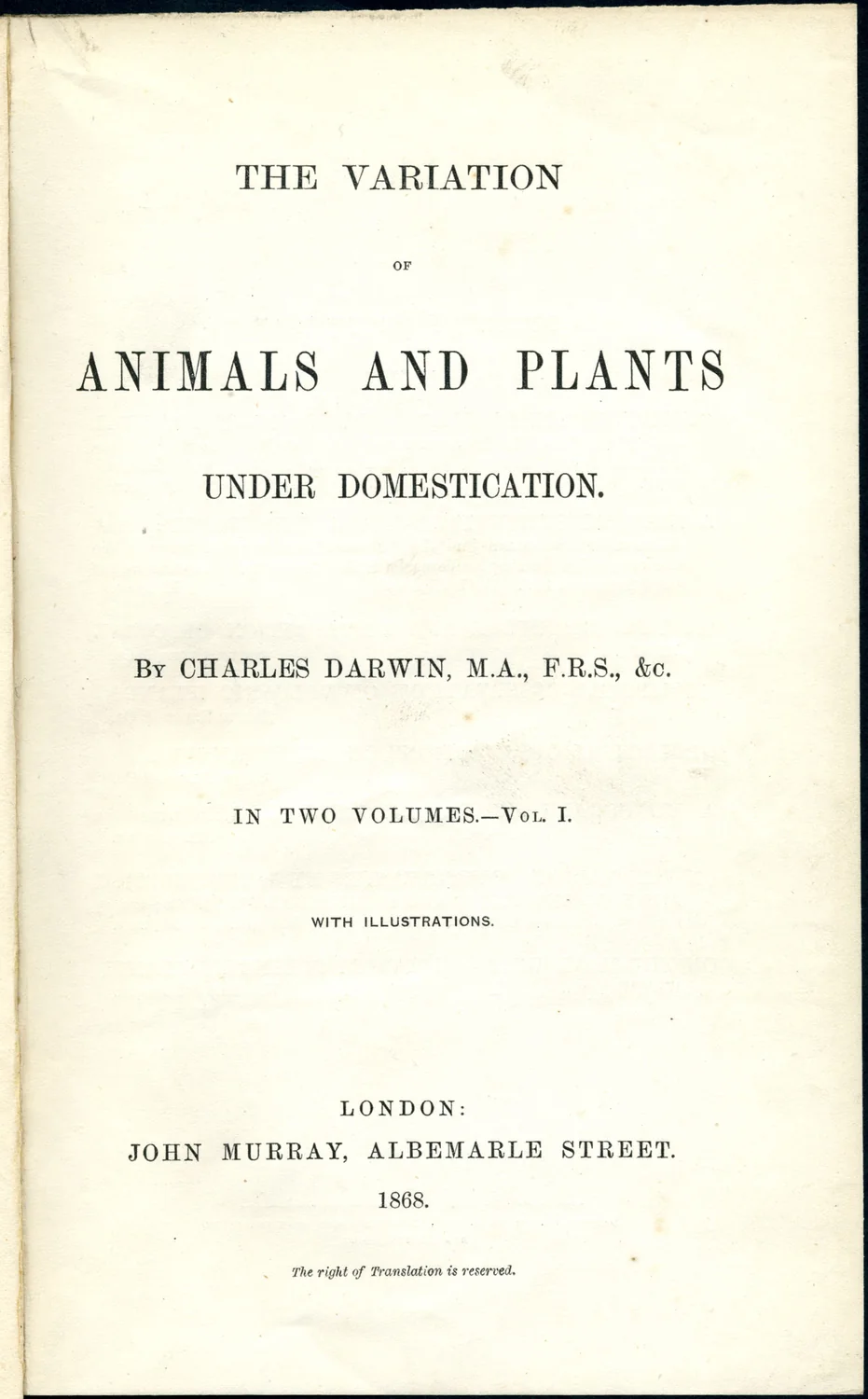
In the opening chapter of On the Origin of Species (1859), Darwin wrote explicitly: “The principle of selection I find distinctly given in an ancient Chinese encyclopaedia.”2 Nine years later, in the second volume of The Variation of Animals and Plants under Domestication (1868), he cited a specific Qing imperial experiment by name—the Kangxi Emperor’s selective cultivation of “Imperial rice” (Yu-daomi) in the palace gardens of Beijing3.
To understand how an agricultural observation recorded inside the Forbidden City travelled across Eurasia into the foundational literature of nineteenth-century biology, one must first examine the Kangxi Emperor’s remarkable personal dedication to empirical science.
I. A Scholar-Sovereign of Natural Philosophy: Kangxi’s Scientific Education and Patronage
The Kangxi Emperor (1654–1722) developed a deep, sustained commitment to European mathematical sciences following a decisive astronomical controversy early in his reign. In 1668, amid a bitter dispute over calendrical reform between conservative court official Yang Guangxian and the Flemish Jesuit Ferdinand Verbiest, Kangxi ordered an empirical test of solar-shadow predictions. Verbiest’s calculations proved consistently exact, convincing the fifteen-year-old emperor that mathematical rigour and direct observation were indispensable instruments of statecraft and inquiry4.
From the 1670s onwards, Kangxi studied Euclidean geometry, arithmetic, astronomy, geography, and musical acoustics directly under Verbiest4,5. After 1688, French “King’s Mathematicians” dispatched by Louis XIV—notably Joachim Bouvet and Jean-François Gerbillon—were appointed as imperial tutors in Beijing to instruct the emperor in European mathematics and human anatomy4. In 1690, Gerbillon and Bouvet translated Ignace-Gaston Pardies’s Élémens de géométrie into both Manchu and Chinese as Kangxi’s personal textbook4. Equipped with Napier’s rods, proportional compasses, solid-geometry models, and a custom-built mathematics desk at court, the emperor not only annotated translated treatises in his own hand, but also personally tutored his sons—particularly his third son, Yinzhi—in geometry, trigonometry, and measurement4.
Beyond personal study, Kangxi translated his scientific interests into monumental imperial undertakings. Within the Imperial Household Department, he fostered court workshops and an imperial glassworks that produced astronomical instruments and optical glassware4,5. Beginning in 1713, he oversaw the compilation of Shuli Jingyun (Collected Basic Principles of Mathematics), an encyclopaedic synthesis of arithmetic, geometry, algebra, and logarithmic tables4. Between 1708 and 1718, he commissioned mixed teams of Qing officials and Jesuit surveyors to execute a nationwide trigonometric and longitudinal survey, yielding the Huangyu Quanlantu (Complete Atlas of the Imperial Territories), the most accurate map of East Asia produced in its era6.
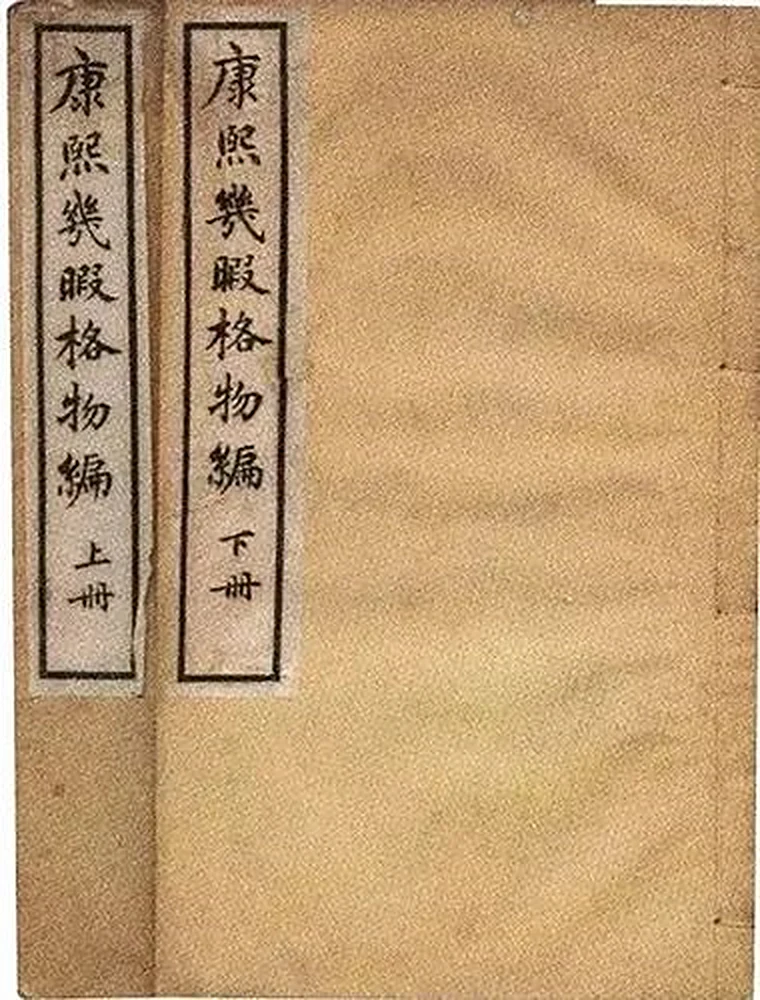
Equally revealing of Kangxi’s empirical mind is his private collection of scholarly notes, Jixia Gewu Bian (Notes on Investigating Things in Moments of Leisure), drafted during his later reign7,8. Organised into six thematic divisions, the work records disciplined observations across astronomy, geology, palaeontology, botany, zoology, and medicine7,8,9. In his entry on the Earth, Kangxi endorsed the spherical-earth model introduced from Europe as the foundation of accurate calendrics; in his entry on Earthquakes, he departed from traditional cosmological omenology, examining focal depth, attenuation over distance, and regional seismicity across northwest China and Taiwan; in entries on fossilised fish (Shiyu) and marine shells embedded in Mongolian desert sands, he pondered ancient shifts between sea and land; and in an entry on Cochineal, he traced the vivid crimson pigment imported from the Americas to scale insects harvested on cacti7. This commitment to observation and verification laid the groundwork for his celebrated rice-breeding trial.
II. Single-Plant Selection in Fengzeyuan: Jixia Gewu Bian and Imperial Rice
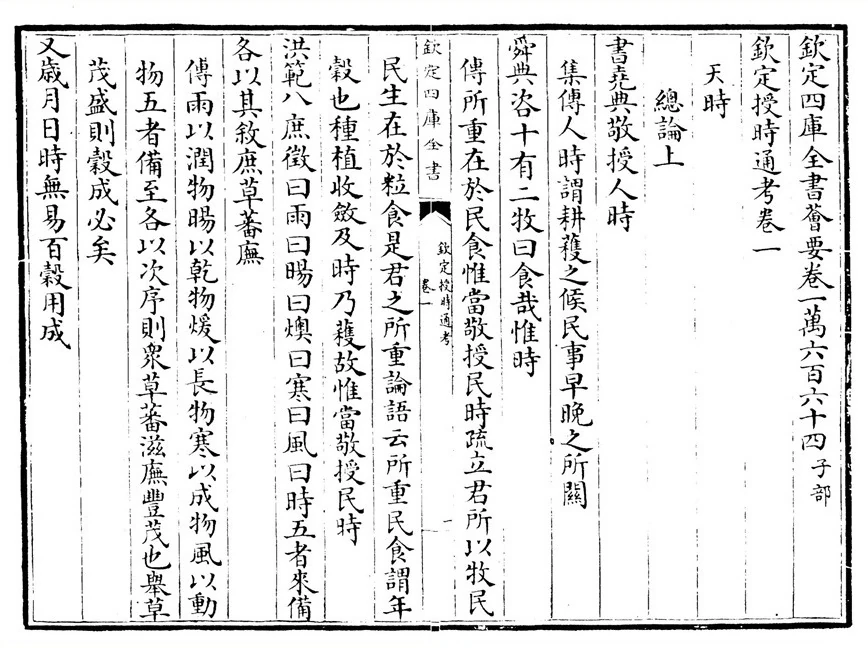
Among the natural-history entries in Jixia Gewu Bian, none proved more consequential in the global history of science than Yu-daomi (“Imperial Rice”). Preserved in full in the Qianlong-era imperial compendia Qinding Shoushi Tongkao and Huangchao Tongzhi, the passage exemplifies Kangxi’s restrained, methodical style of recording evidence10,11.
According to the emperor’s own account, the experimental paddies of Fengzeyuan—located within the imperial gardens immediately west of the Forbidden City—were planted with standard Yutian rice, a cultivar that ordinarily ripened in the ninth lunar month. Walking along the earthen field ridges in late June of one year, Kangxi noticed a solitary plant standing prominently above the still-unripe green stalks, its grains already firm and fully mature10.
Rather than treating the anomalous stalk merely as an auspicious court omen, Kangxi applied an empirical test of heritability. He ordered the grains from that single plant harvested and stored separately so that they could be sown the following spring to verify whether the early-ripening trait would reproduce reliably10.
In June of the following year, its progeny once again ripened ahead of schedule. Over the ensuing forty years, Kangxi continuously multiplied and refined the line within the imperial fields, establishing a slender, pale-reddish, fragrant early-maturing cultivar named Yu-daomi (Imperial Rice)10,11. Transplanted beyond the Great Wall to the imperial summer retreat at Rehe (modern Chengde), the cultivar matured reliably before early autumn frosts, becoming the only variety capable of ripening in that northern climate12. In modern agronomic history, this documented intervention is recognised as an early systematic instance of single-plant pedigree selection (yisui chuan, “transmission from a single ear”), forming a foundational lineage for Beijing’s renowned Jingxi rice13.
III. Textual Transmission Across Eurasia: From Beijing to European Sinology
Published posthumously in 1732 during the Yongzheng reign and subsequently incorporated into the Siku Quanshu as well as late-Qing lithographic editions7,9, Kangxi’s Jixia Gewu Bian gained wide domestic circulation—while the Imperial Rice entry was further enshrined in state compilations such as Qinding Shoushi Tongkao (1742) and Qinding Rehe Zhi (1781)10,12. Its entry into nineteenth-century European biology depended upon an unbroken chain of French scholarly mediation.
The decisive first step took place in the 1770s. The French Jesuit Pierre-Martial Cibot (1727–1780), stationed in Beijing, translated forty-two selected passages from Jixia Gewu Bian into French under the title Observations de physique et d'histoire naturelle de l'empereur Kang-hi7,14. Published in Paris in 1779 in Volume 4 (pp. 452–483) of the landmark sinological series Mémoires concernant l'histoire, les sciences, les arts, les mœurs, les usages, &c. des Chinois, Cibot’s translation introduced European readers for the first time to Kangxi’s empirical notes and his cultivation of Imperial Rice14,15.
During the 1850s, two widely read French works relayed this material into mainstream British intellectual life. In 1850, the French sinologist Marquis Léon d'Hervey de Saint-Denys published Recherches sur l'agriculture et l'horticulture des Chinois, detailing Chinese records of animal and plant selection16. Shortly afterwards, the French Lazarist missionary Évariste Régis Huc recounted Kangxi’s selection of Yu-mi (Imperial rice) in his influential survey The Chinese Empire (1854–1855)17. Through these French channels, the Qing court’s agronomic record reached the desks of Victorian naturalists.
IV. Citations by Darwin and Wallace and Their Significance in the History of Science
In constructing the theory of evolution by natural selection, Charles Darwin relied heavily on documented human experience with artificial selection to demonstrate how the sustained preservation of slight heritable variations can generate distinct, stable forms. Whereas On the Origin of Species (1859) offered only a concise reference to an “ancient Chinese encyclopaedia” recording the principle of selection2, Darwin presented his full bibliographic documentation in Chapter XX (“Selection by Man”) of Volume 2 of The Variation of Animals and Plants under Domestication (1868)3,18.
Explicitly citing d'Hervey de Saint-Denys (p. 229) and Huc’s The Chinese Empire (p. 311), Darwin wrote:
“Imperial rice, was noticed at an ancient period in a field by the Emperor Khang-hi, was saved and cultivated in his garden, and has since become valuable from being the only kind which will grow north of the Great Wall.”3,18,19
Notably, Darwin placed the Kangxi Emperor—who died in 1722, eighty-seven years before Darwin’s own birth—at “an ancient period.” This chronological compression likely reflected the temporal distance perceived by nineteenth-century European scholars encountering East Asian historical figures through layered secondary translations. With respect to biological substance, however, Darwin’s assessment was exact: Kangxi’s experiment furnished concrete, documented proof that isolating a spontaneous early-ripening variation and propagating it selectively could expand a staple crop beyond its previous climatic limits.
Equally remarkable is that Alfred Russel Wallace—co-discoverer of natural selection—independently identified the same passage. While conducting fieldwork in the Malay Archipelago between 1855 and 1859, Wallace transcribed Huc’s account of Kangxi’s Imperial Rice into his Species Notebook and referenced it in correspondence with Darwin20. When Wallace later authored the article on “Acclimatisation” for the ninth edition of the Encyclopædia Britannica (1875), he quoted Kangxi’s first-person account in full as a premier historical demonstration of how selective breeding of spontaneous variants enables crops to adapt to colder latitudes—an excerpt retained in the celebrated eleventh edition of 191121,22.
Evaluated through the rigorous lens of the history of science, the Kangxi Emperor’s trial in Fengzeyuan did not anticipate evolutionary theory in the modern theoretical sense. His achievement lay in disciplined empirical observation and methodical artificial selection; the revolutionary insight of Darwin and Wallace was to recognise that unguided natural selection operates across biological time through an analogous filtering of heritable variation. Yet precisely because both founders of evolutionary biology anchored their argument in verifiable breeding records from across the globe, a carefully documented seventeenth-century experiment from an imperial Beijing paddy secured an enduring place within the foundational texts of modern biology.
References · 22 entries
- Guangming Daily [光明日报]. (2017, March 1). Pan Jixing: The invention rights of the “Four Great Inventions” require Chinese scholars to defend them [潘吉星:“四大发明”的发明权需要中国学者“保卫”]. Zhonghua Dushubao. https://epaper.gmw.cn/zhdsb/html/2017-03/01/nw.D110000zhdsb_20170301_1-16.htm
- Darwin, C. (1859). On the origin of species by means of natural selection (1st ed., p. 27). John Murray. [Classic Literature Library]. https://charles-darwin.classic-literature.co.uk/the-origin-of-species-by-means-of-natural-selection/ebook-page-27.asp
- Darwin, C. (1868). The variation of animals and plants under domestication (Vol. 2, Ch. XX: Selection by man). John Murray. [Wikisource]. https://en.m.wikisource.org/wiki/The_Variation_of_Animals_and_Plants_under_Domestication/XX
- Han, Q. (2026). Jesuits, Kangxi Emperor, and the compilation of European mathematics. Religions, 17(3), 316. https://www.mdpi.com/2077-1444/17/3/316
- Swen, L. (2021). The Jesuits and Kangxi's Imperial Household Department. In Jesuit mission and submission: Qing-Jesuit relations in the Kangxi era (Ch. 3). Brill. https://brill.com/display/book/9789004447011/BP000005.xml
- Wu, H., Statman, A., & Cams, M. (2017). Displacing Jesuit science in Qing China: Introduction. East Asian Science, Technology, and Medicine, 46, 15–22. https://brill.com/view/journals/east/46/1/article-p15_4.pdf
- Zou, Z. [邹振环]. (2024, June 1). Why Emperor Kangxi specifically mentioned Taiwan in his reading notes [康熙皇帝所写的这一读书心得,为何特意提到了台湾]. Jiefang Daily / Shangguan News. https://www.jfdaily.com/wx/detail.do?id=755881
- Zou, Z. [邹振环]. (2023). Discourse at court: The interpretation of animals in Kangxi's Jixia Gewu Bian [论道庙堂:《康熙几暇格物编》中的动物释读]. International Sinology [国际汉学], (6), 110–120. https://www.hssonline.cn/zh/article/doi/10.19326/j.cnki.2095-9257.2023.06.012/
- Kangxi Emperor [清圣祖]. (Guangxu era [1875–1908]). Kangxi Jixia Gewu Bian, 2 juan, Vol. 1 [康熙几暇格物编二卷第一册] [National Library of China digital scan]. Wikimedia Commons. https://commons.wikimedia.org/wiki/File:NLC892-312002001633-403033_%E5%BA%B7%E7%86%99%E5%B9%BE%E6%9A%87%E6%A0%BC%E7%89%A9%E7%B7%A8_%E4%BA%8C%E5%8D%B7_%E7%AC%AC1%E5%86%8A.pdf
- Ortay [鄂尔泰] et al. (1742). Qinding shoushi tongkao (Siku Quanshu ed.) [钦定授时通考(四库全书本)· 全览一] [Quoting Emperor Kangxi’s Jixia Gewu Bian]. Wikisource. https://zh.wikisource.org/zh-hans/%E6%AC%BD%E5%AE%9A%E6%8E%88%E6%99%82%E9%80%9A%E8%80%83_(%E5%9B%9B%E5%BA%AB%E5%85%A8%E6%9B%B8%E6%9C%AC)/%E5%85%A8%E8%A6%BD1
- Ji, H. [稽璜] et al. (1787). Huangchao tongzhi, juan 125 [皇朝通志 · 卷一百二十五] [Entry on early imperial rice and Jixia Gewu Bian]. Chinese Text Project. https://ctext.org/wiki.pl?if=gb&chapter=690710
- Heshen [和珅] et al. (1781). Qinding Rehe zhi (Siku Quanshu ed.) [钦定热河志(四库全书本)· 全览四] [Entry on imperial rice transplanted to Rehe Mountain Resort]. Wikisource. https://zh.wikisource.org/wiki/%E6%AC%BD%E5%AE%9A%E7%86%B1%E6%B2%B3%E5%BF%97_(%E5%9B%9B%E5%BA%AB%E5%85%A8%E6%9B%B8%E6%9C%AC)/%E5%85%A8%E8%A6%BD4
- Beijing Daily [北京日报客户端]. (2024, October 9). Yandu Xinqu: Imperial rice “single-stalk transmission” and Jingxi rice [燕都新趣|御稻一穗传,金秋时节京西稻流香古今]. https://xinwen.bjd.com.cn/content/s67066c4be4b01a5d71c9bd96.html
- Brill Reference Works. (n.d.). Mémoires concernant l'histoire, les sciences, les arts, les mœurs, les usages, &c. des Chinois (1776–1814) [Entry noting Pierre-Martial Cibot's translation of Emperor Kangxi's Observations in Vol. 4]. Christian-Muslim Relations 1500–1900. https://referenceworks.brill.com/display/entries/CMR2/COM-30623.xml?language=en
- Presses universitaires de la Méditerranée. (n.d.). Annexe II: Sommaire des Mémoires concernant les Chinois [Listing Observations de physique et d'Histoire naturelle de l'Empereur Kang-hi]. OpenEdition Books. https://books.openedition.org/pulm/4543
- Hervey-Saint-Denys, M. J. L., Marquis d'. (1850). Recherches sur l'agriculture et l'horticulture des Chinois. Allouard et Kaeppelin. [Internet Archive]. https://archive.org/details/recherchessurlag00hervuoft
- Huc, É. R. (1855). The Chinese empire: A general & missionary survey (Vol. 2). Longman, Brown, Green, and Longmans. [Internet Archive]. https://archive.org/stream/cihm_990937/cihm_990937_djvu.txt
- Darwin, C. (1868). The variation of animals and plants under domestication (Vol. 2, p. 120). John Murray. [Classic Literature Library]. https://charles-darwin.classic-literature.co.uk/variation-of-animals-and-plants-under-domestication-v2/ebook-page-120.asp
- Darwin, C. (1868). The variation of animals and plants under domestication (Vol. 2). [Project Gutenberg]. https://www.gutenberg.org/cache/epub/2872/pg2872-images.html
- Costa, J. T. (Ed.). (2013). On the organic law of change: A facsimile edition and annotated transcription of Alfred Russel Wallace's Species Notebook of 1855–1859. Harvard University Press. https://dokumen.pub/on-the-organic-law-of-change-a-facsimile-edition-and-annotated-transcription-of-alfred-russel-wallaces-species-notebook-of-1855-1859-1nbsped-9780674726024-9780674724884.html
- Wallace, A. R. (1875). Acclimatisation. In Encyclopædia Britannica (9th ed.). The Alfred Russel Wallace Page, Western Kentucky University. https://people.wku.edu/charles.smith/wallace/S248.htm
- Encyclopædia Britannica. (1911). Acclimatization. [Wikisource]. https://en.wikisource.org/wiki/1911_Encyclop%C3%A6dia_Britannica/Acclimatization
Say Something
Where have you been a guest, and what hospitality spectacle left you speechless?